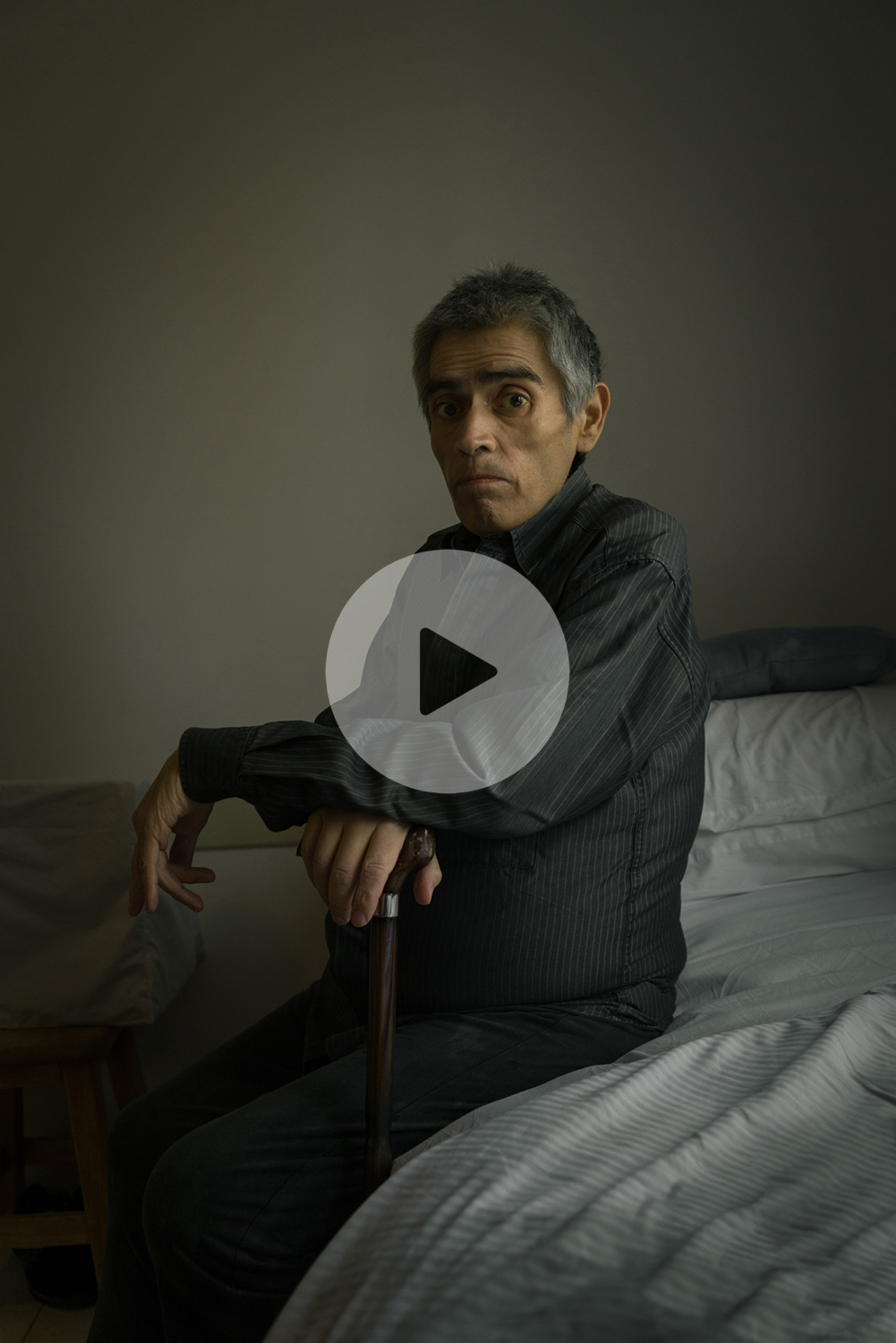
A-Dios
ENG
In a culture where death remains at the margins, the end of life is often experienced in silence. What is left unnamed is rarely organized, and what is not organized can hardly be cared for.
Where the State is absent, care shifts to the community. It is within this context that Hospice San Camilo opens its doors. Those who arrive at San Camilo are people with a life expectancy of less than six months, often without financial resources or a support network capable of sustaining them. In such circumstances, access to comprehensive palliative care—including symptom management, emotional support, and continuous attention—is not a guaranteed condition, but rather an exception.
The hospice provides, free of charge, a human-centered model of care sustained by physicians, nurses, and more than 160 volunteers, filling a gap that formal structures in Argentina do not guarantee. Within this walls, time acquires another meaning: care is no longer measured in terms of efficiency, but through the ability to remain present when curative treatment is no longer possible.
Accompanying someone at the end of life means recognizing vulnerability as a shared human condition. The presence of others profoundly transforms the experience of dying. Between abandonment and care lies a defining dimension of every society. The way a society accompanies the dying reveals not only its available resources, but also its collective values, priorities, and limits.
-
I came into contact with the hospice in 2019 aiming to record and share life stories of people in their final stage of life. A few weeks later, I began volunteering, activity I still carry out every Monday afternoon.
This project has become deeply meaningful to me. Having experienced cancer in 2014 and a heart attack in 2020, I am forced to make peace with death.
ESP
En una cultura donde la muerte permanece en los márgenes, el final de la vida suele vivirse en silencio. Lo que no se nombra tampoco se organiza, y lo que no se organiza difícilmente puede ser cuidado.
Allí donde el Estado no alcanza o no llega, el cuidado se desplaza hacia la comunidad. Es en ese contexto donde el Hospice San Camilo abre sus puertas. Quienes llegan a San Camilo son personas con expectativa de vida menor a seis meses, en muchos casos, sin recursos económicos o sin una red que pueda sostenerlas. En ese escenario, el acceso a los cuidados paliativos no constituye una condición garantizada, sino una excepción.
El hospice sostiene, de manera gratuita, un sistema de cuidado humanizado basado en el trabajo de medicos, enfermeros y más de ciento sesenta voluntarios, cubriendo un vacío que en Argentina no está garantizado por las estructuras formales. Puertas adentro, el tiempo adquiere otra forma: el cuidado no sólo se mide en términos de eficacia, sino también en la capacidad de sostener una presencia cuando ya no hay tratamiento curativo.
Acompañar en el final de la vida implica reconocer la vulnerabilidad como una condición compartida. La presencia de otros transforma radicalmente la manera en que ese proceso es vivido. Entre el abandono y el cuidado se define una dimensión central de toda sociedad. Las formas en que se transita el final de la vida revelan no solo los recursos disponibles, sino también los valores, prioridades y límites colectivos.
_
En Marzo de 2019 tomé contacto con el Hospice San Camilo. Mi intención era registrar testimonios de personas en final de vida. Pocas semanas después comencé a asistir de voluntario, actividad que sigo ejerciendo cada lunes por la tarde.
Este proyecto se ha vuelto muy significativo para mí. Como persona atravesó un cáncer en 2014 y sufrió un infarto en 2020, me he visto obligado a hacer las paces con la muerte.